I spent eleven years in the publishing industry, watching brilliant designers and photographers turn their passion into a frantic race against the clock. I’ve seen the "hustle" burn out the most creative minds in the building. Most of it came down to a simple, https://www.the-art-world.com/blog/health-beauty/creative-work-often-depends-as-much-on-ritual-as-inspiration/ fatal flaw: they were treating their brain like a hard drive that never needed to defrag. If you’re trying to design, write, or create while your brain is being shredded by the constant ping of notifications and the subtle, insidious tug of social media algorithms, you aren’t working—you’re just reacting.
When I talk to clients, they often come to me asking for a "productivity hack." I usually stop them right there. Productivity, as it’s sold to us in corporate jargon, is often just a fancy way of saying "do more, feel worse." Instead, let’s talk about creative concentration. Let’s talk about how to protect your headspace using the one thing that can cut through the noise: ambient music.

The Noise: Why Your Brain is Running on Empty
You cannot produce high-quality work if your nervous system is permanently set to 'alert.' Every notification that hits your screen is a tiny electric shock to your concentration. Every time you open a feed, the social media algorithms are running a heist on your attention span, designed to keep you in a state of low-grade anxiety.
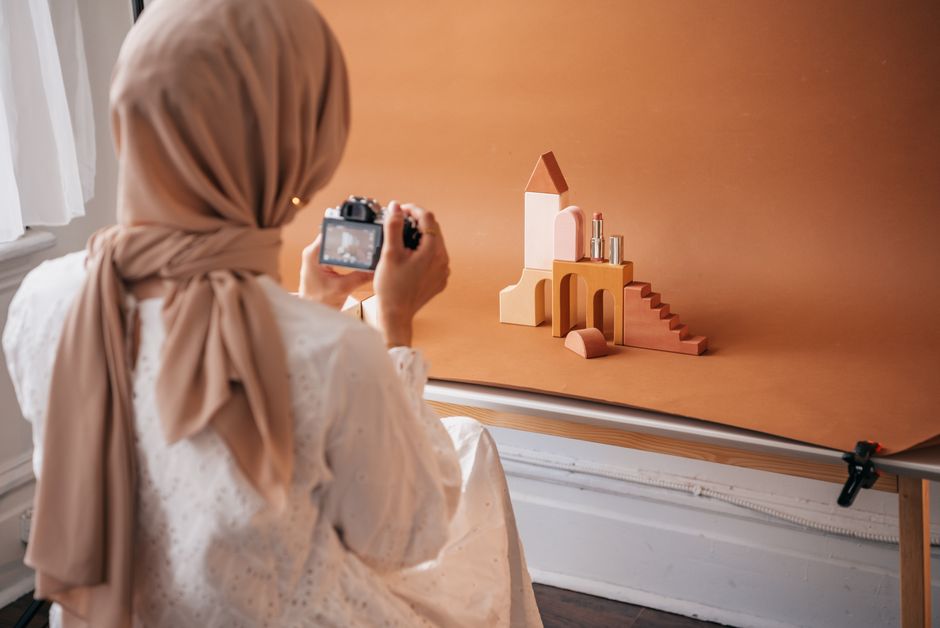
When you sit down to design, you aren’t starting from a blank page; you’re starting from a deficit. You are exhausted by the digital friction of the morning. Most "wellness" advice ignores the biological reality of this. They tell you to meditate for an hour or do a yoga retreat, as if you have that kind of time. I don't. And if I’m being honest, neither do you. What we need are tiny rituals—things that take under two minutes—to act as a bridge between the chaotic noise of the internet and the quiet clarity of your design work.
Ambient Music as a Sensory Boundary
Music for design focus isn’t just "background noise." It is a sonic fence. When you put on the right ambient track, you are signaling to your brain that the world outside the screen no longer exists. You are turning off the "reactivity" switch and turning on the "synthesis" switch.
But be careful: not all ambient music is created equal. If the music has lyrics, your brain's language center will try to process them, taking energy away from your layout, your color theory, or your typography. If the tempo is too erratic, your heart rate will follow it. You want something that provides a steady, predictable environment where your creative thoughts can roam without being poked by a chorus.
Recommended Soundscapes for Creative Concentration
I’ve broken down the types of ambient sound that actually work for deep focus. Choose these based on the state of your brain at the start of your session.
Genre/Style Best For Why it Works Textural/Drone Complex UI/UX layout Minimal movement prevents distraction. Natural/Field Recordings Brainstorming/Sketching Lowers cortisol; mimics a relaxed, open space. Minimalist Piano/Keys Final refinement/Cleanup Provides a gentle, rhythmic structure. Binaural Beats (Alpha Waves) "The Wall" (Mental fatigue) Encourages brainwave states associated with flow.The "Tuesday at 3 PM" Test
Here is where I lose the corporate consultants: What does this look like on a Tuesday at 3 pm?
Tuesday at 3 pm is when the "I’m tired, the project isn't going well, and I have five emails to reply to" feeling hits. It is the graveyard of creativity. If your workflow relies on perfect morning motivation, you’re doomed. Your workflow must be built for your weakest moments.
When you hit that 3 pm slump, don't reach for an energy drink or scroll through an app. Delete the noise. Literally. If an app has sent you three notifications in the last hour, delete it from your phone. You can reinstall it later if you truly need it. (I’ve deleted apps mid-sentence while writing this—if it pings, it’s gone.) Then, hit play on your focus playlist. This is your ritual. It’s not about finding "inspiration" like it's some magical, mystical event. It’s about building a reliable, boring, repeatable bridge into your focus state.
Wellness is Not a Luxury; It’s the Infrastructure
I get genuinely annoyed when people talk about "wellness" as if it’s just a skin-care routine or a green juice. If you aren’t sleeping, you aren’t creative. Period. The best ambient music in the world cannot compensate for a sleep-deprived brain. When you are chronically tired, your brain loses its ability to filter out distractions. You become more susceptible to the siren call of social media algorithms because your brain is desperate for the quick dopamine hit it’s failing to provide itself naturally.
Burnout isn't a badge of honor; it's a failure of systems. Your creative practice is an ecosystem. If your sleep is the soil, your focus tools are the structure, and your ambient music is the weather. You need to tend to all of it.
Tiny Rituals (Under 2 Minutes) to Prime Your Brain
Before you dive into that design software, try one of these. They serve as a transition, a way to tell your nervous system that it’s time to move from "consumer" to "creator."
- The Phone Toss: Place your phone in a drawer in another room. Do not just flip it over. Physical separation is the only real barrier against algorithms. The Sound Trigger: Have a specific 2-minute "buffer" track that you only ever play when it is time to work. Don’t listen to it during leisure. Pavlov yourself into focus. The Desk Clear: Wipe your workspace with a damp cloth. It takes 45 seconds. The physical act of clearing the "mess" of the morning creates an instant psychological reset. The Breath of Four: Inhale for 4, hold for 4, exhale for 4. Repeat 4 times. It forces your heart rate down and interrupts the "urgent" signal your brain is receiving from your inbox.
Moving Forward: Beyond the Noise
You don't need a fancy office or an expensive subscription to find deep focus. You need to be ruthless about the signals you allow into your head. The algorithms want you scattered, reactive, and tired because that’s when you’re most profitable to them. You, however, want to be calm, intentional, and sharp.
Next time you sit down to design, don't look for a "hack." Look for your ritual. Put on the drone music, put the phone in a different room, and acknowledge that at 3 pm on a Tuesday, this is how you survive and create. Sleep well, listen intently, and for the love of everything, stop letting your apps dictate the rhythm of your day. You’re the designer here—take back the design of your own attention.